| | | | | | | |
The era of grown-up AI is emerging, with governance, architecture, and model-agnostic approaches taking shape. A few vendors are striving to be the grown-ups in the AI implementation room.
Recent earnings call scenes highlight how the need for AI maturity is moving to the forefront. Rest assured, vendors will start speaking to enterprise AI maturity in the days ahead. Microsoft's fourth-quarter earnings call featured CEO Satya Nadella discussing the need for model-agnostic approaches, architectures, and harnesses.
Exhibit A of why you need to think through more mature AI approaches is the OpenAI fiasco with Hugging Face.
This shift to enterprise AI for grown-ups has been underway for months among companies across multiple industries. These enterprises aren't looking to spin up a bunch of AI agents to run amok. They're looking for automation, return, data sovereignty, and control. These companies also aren't going to use a token-budget-busting frontier model for tasks that can be handled by a lower-cost model.
At Constellation Research’s Analyst Relations Experience in Carlsbad, CA, our analysts noted the maturity of enterprise AI. A few takeaways include: - There’s a shift from one-off AI stack choices to model portfolio management and routing across multiple models.
- Executives will focus less on “which model” and more on process, decision, and outcome design.
- Standardized blueprints, playbooks, and best practices will reduce chaos and move the market toward repeatable patterns.
- Owning the decision loop and its context will be more powerful than owning a single app or workflow.
- Enterprises are focusing on clear ownership of decisions and outcomes.
Nadella obviously wants to be seen as the grown-up for enterprise AI. He has had a steady drumbeat of comments about the need for multiple models and architectures that don't box you in. In addition, Microsoft has a good approach to AI, developing less expensive models that simply get the job done. The launch of its latest cybersecurity model performs well, optimizes for costs, and is designed to be part of a broader harness. Internally, Nadella said Microsoft has been optimizing hardware and software to extend GPUs and lower costs. The company has also been leveraging its MAI models. "It starts with model choice. Every customer wants the right model for each task based on quality, latency, cost, and compliance," said Nadella. "We are building a new model system where the harness, context, memory, and action space are separate from any one model family, thereby moving the frontier on the cost-to-outcome curve. And it's not just about cost; it also has the added benefit of business continuity and resilience because every model is substitutable. This is the system we are using in our products with great results."
Nadella said enterprises need to control their own AI destiny and the data that goes with it. "If a firm is a learning machine, they need their own learning machine. The models are an input, not some extraction of the knowledge of the enterprise," he said. "Every firm is going to evaluate who the providers are who are helping them with their outcomes."
For Microsoft, those outcomes are driven more by architecture than a frontier model. "You have to keep your harness separate from the model," said Nadella. "The harness will ensure that any given model at any time is swappable. You can use frontier models, multiple models, low-cost models, and train your own model. You should have all the outputs, traces, and context."
This model-neutral architecture has been mentioned repeatedly by CxOs. At AWS Summit in New York, Tom Pagram, Head of AI at Virgin Australia, laid out the architecture that enables the company's strategy. His message was not to let your vendor control your strategy. UnitedHealth Group also has a model-agnostic architecture. Cognizant CEO Ravi Kumar addressed the evolution of enterprise AI on the company's second quarter earnings call. He said the company is building an AI delivery operating system that enables customers to combine engineering and business operational harnesses.
Kumar said the first chapter of AI adoption was experimental, but now it's about delivering results. "We have a big role to play in starting from building the harnesses where you can capture the context so that when you do the transactions on a regular basis, you can create repeatability, model routing, which means depending on the kind of task, you could use an open weight model, you could use a costly/expensive closed frontier model or you could use a cheaper closed frontier model or you may not use a model," said Kumar.
That theme was echoed by Amit Zavery, President, Chief Product Officer & COO at ServiceNow, on the company's second quarter earnings call. "The large language models are getting commoditized. There is no reason for using some of these most expensive ones. We're very smart about how we use and leverage some of these emerging technologies, where you use open-weight versions, where we have our own, where we have domain-specific ones, and where we use some of these higher-end frontier models," said Zavery. "We really optimize across the board to ensure we're getting the best outcome while keeping the costs low."
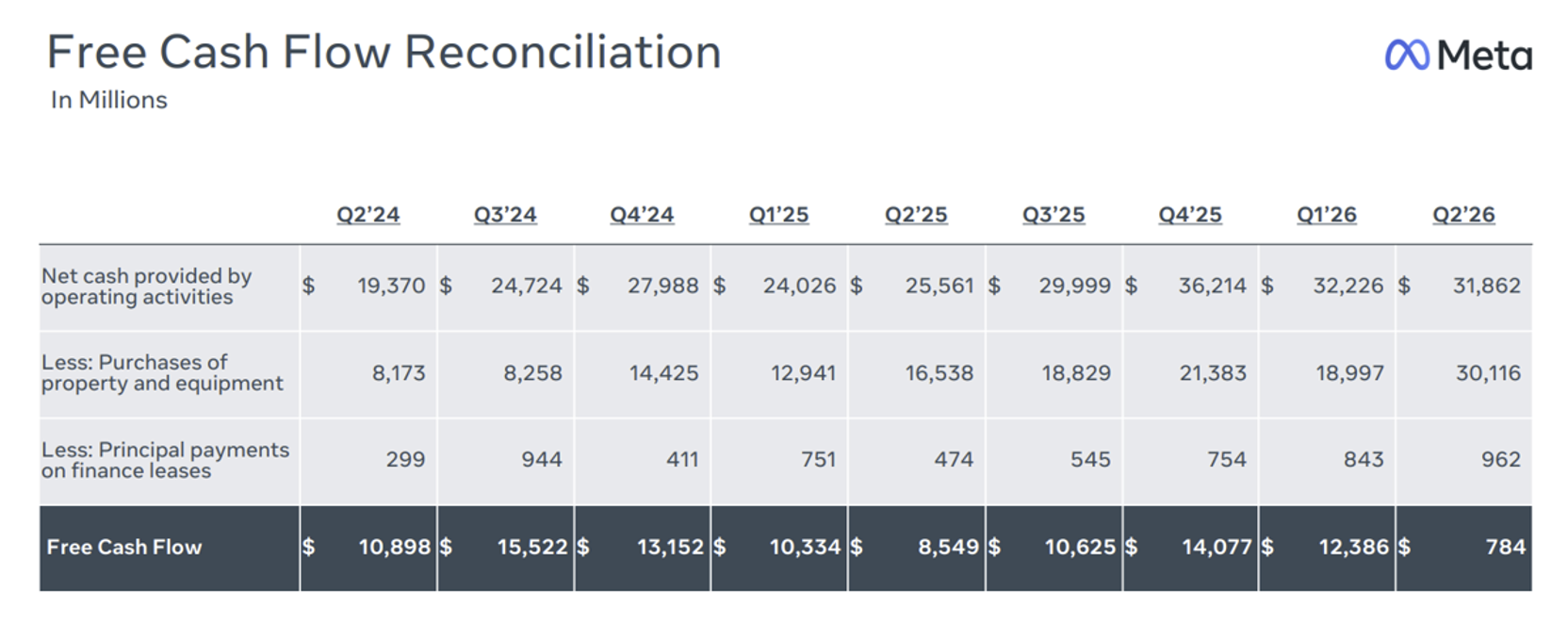
Observations - Meta sees a big opportunity to sell to enterprises. Meta CEO Mark Zuckerberg was so desperate to show value from the company’s AI spending spree that he was talking up the enterprise opportunity. Zuck is going to have a bit of a hurdle given Meta’s false starts in the enterprise before (remember Meta Workplace?) “We see a large enterprise opportunity to sell to businesses, including APIs, business agents, potentially selling compute directly and other services that we're building for large customers,” said Zuckerberg, who spent much of Meta’s earnings call trying to convince Wall Street his AI investments were paying off. The free cash flow says otherwise.
| | | | - RFID was a buzzworthy technology more than two decades ago, but apparently it has staying power. RFID was a star attraction on the UPS earnings call. RFID is being paired with AI. “Think of RFID as the eyes and ears within our network, and AI as the brain,” said UPS CEO Carol Tome.
- SaaS stocks were among the few sectors to gain on a Wall Street wipeout day on Wednesday. Is SaaS back? Maybe. However, it’s more likely that SaaS stocks have an inverse relationship with the sentiment of OpenAI and Anthropic. Maybe it’s just me, but I’m sick of both of them. Earnings from ServiceNow and SAP were solid, and Microsoft’s results were well received.
- Starbucks CEO Brian Niccol’s turnaround is faring well. The company delivered a solid quarter, but it hasn’t fully updated its systems and processes yet. “In supply chain, we will continue scaling daily delivery and testing a 24-hour operating clock to improve speed, availability and reliability. And in technology, fiscal 2027 will be an important modernization year with new inventory ordering, staffing and scheduling and point-of-sale systems to improve execution and make our coffee houses easier to run,” said Niccol. For Starbucks, AI returns are behind the scenes
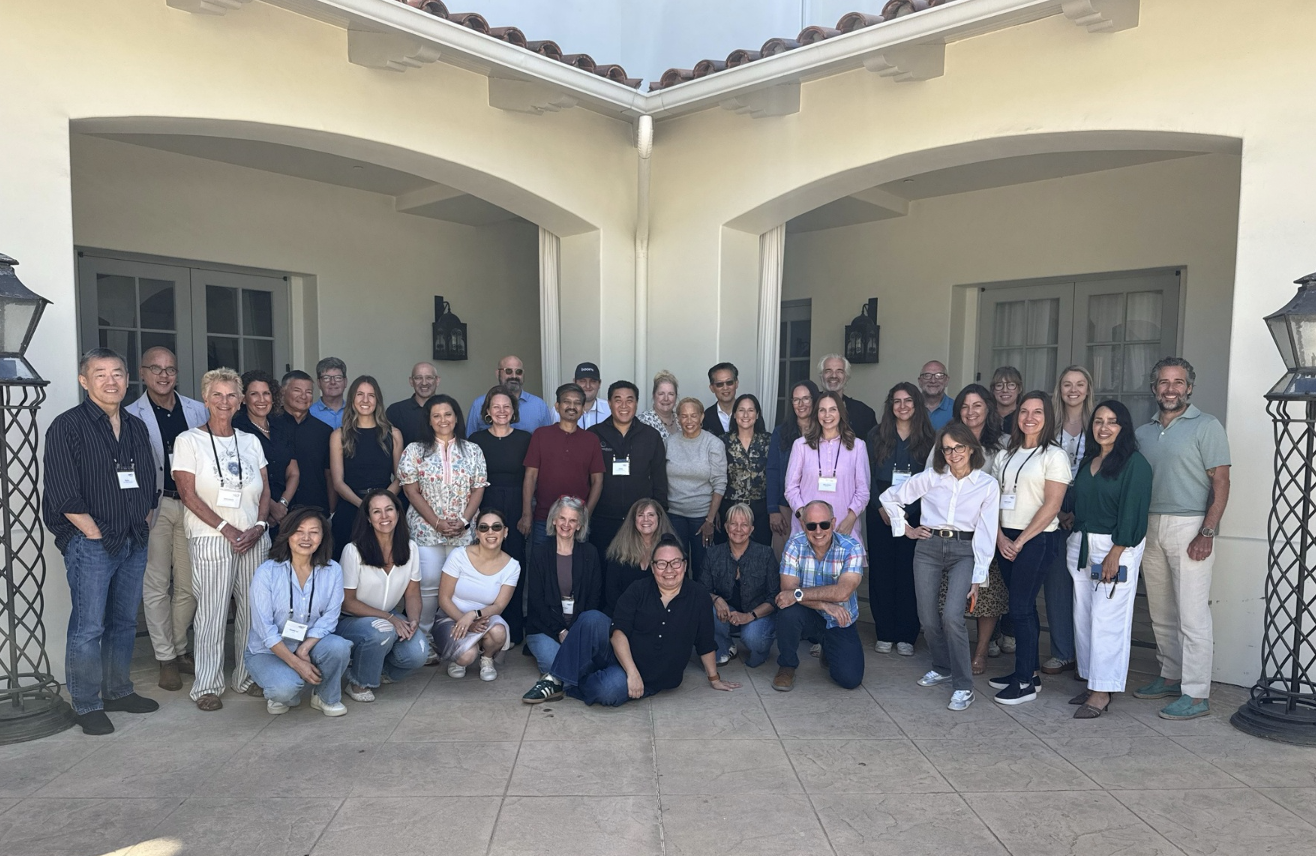
- It was a swell week with our analyst relations community this week at our ARX conference. There were many insights to be gained under Chatham House rules. All I can disclose is this picture.
| | | | | |
NOTEBOOK
📒 For the latest Insights and breaking news on AWS and Apple, see Constellation Insights and Notebook.
✅ IBM, along with researchers at the University of Chicago, Qedma, and Algorithmiq, highlighted a series of computations that they claim showed quantum advantage with error correction. A trio of papers walks through the calculations and the research.
💪🏽 Arm delivered a strong first quarter and has promising AI CPU efforts. CEO Rene Haas said: "Demand now exceeds $2 billion as we continue to add new customers, including multiple customers in the U.S. and China, while the overall value of our pipeline has continued to strengthen. We're also working closely with our manufacturing and supply chain partners to expand capacity. Our confidence in achieving upside to our $1 billion opportunity for the Arm AGI CPU business has increased in the past 90 days."
📉 Qualcomm reported third quarter earnings of $2 billion, or $1.87 a share, on revenue of $9.95 billion, down 4% from a year ago. Non-GAAP earnings were $2.21 a share. The company said it performed well and managed through memory price volatility and tight supply. Qualcomm's non-GAAP earnings missed estimates by a penny a share.
📩 Anthropic CEO Dario Amodei outlined the company's stance on open weight models and countered some of the arguments laid out by Nvidia in its recent open letter on the topic.
🏗️ Nate Baxter, the new CEO for Scotts Miracle-Gro Company, said he's planning to hire a new CIO and Chief Innovation Officer but won't fill the chief operating officer role. Speaking on Scotts Miracle-Gro's third quarter earnings call, Baxter said he's building out his team to drive transformation.
🫱🏽🫲🏾 Anand Birje, former CEO of Encora, will become Hitachi's CEO of Digital Engineering & AI Solutions within the Digital Systems & Services sector. Birje stepped down from Encora in April. Encora was acquired by Coforge.
📈 Bloom Energy passed the $1 billion quarterly revenue mark for the first time. The company reported second-quarter earnings of 62 cents per share on revenue of $1.06 billion, up 165% from a year ago.
↔️ Boomi said it has closed its Lunar.dev acquisition. The company said it plans to provide an AI gateway to govern AI agents and manage connectivity between models and enterprise systems. DoorDash is cleared to operate a drone delivery system.
| | | |
Insights Archive How UnitedHealth Group sets its AI stack, targets 1,000 use cases Enterprise vendor pecking order will be upended by volatility, AI inflection points Here’s what we learned about AI projects from enterprise buyers so far Here’s what we learned about AI projects from enterprise buyers so far Don't let your vendor's AI strategy become yours For Starbucks, AI returns are behind the scenes What if our AI infrastructure is already built? How to avoid vendor lock-in in the AI age AI inference costs will be a major concern: What's the fix? How Prudential CTO Liz Brand is approaching agentic AI, transformation The private preview plague Google Cloud, AWS, Microsoft Azure: The AI vertical integration race How Verizon manages AI agent sprawl The space race and what it means for enterprises Google Cloud Next 2026: A look at the big themes Your AI talent planning algorithm is common sense Zillow bets on content, context, data flywheel as AI differentiator AI Forum 2026: There isn’t an easy button for AI Constellation Research's Futures Forum: What CEOs are thinking Where’s tokenomics for the rest of us?
Disruption coming for ERP and not from where you'd think
Anthropic vs. SaaS: A nuanced view
Zoho Day 2026 themes to watch: ERP, SaaS, customer value, AI, sovereignty
How three hotel giants are playing agentic commerce, AI
SaaS under the microscope: How to evaluate your vendor Forward-deployed engineers: The promise, peril in AI deployments Caterpillar’s AI Vision Takes Shape, but Data, Cloud Focus Was the Precursor Agentic AI experiences will determine enterprise winners Why enterprise AI leaders need to bank on open-source LLMs -
Enterprise technology 2026: 15 AI, SaaS, data, business trends to watch
| | | | | | | | | | | |