| | | | | |
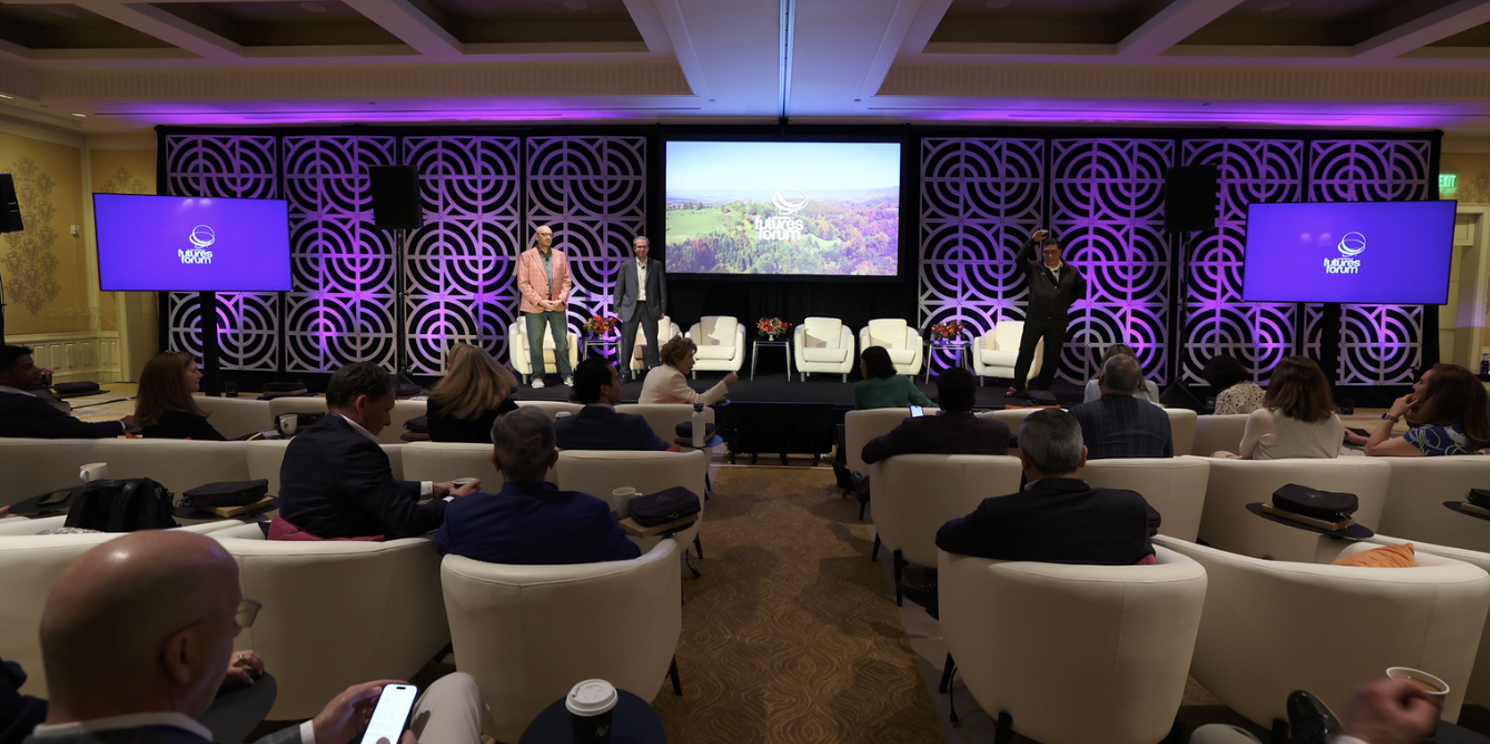
AI has accelerated the rate of change for enterprises, and CEOs and boards of directors need to keep up, lead, and transform industries. Constellation Research brought together 120 public company CEOs and board members at its Futures Forum to empower the "responsible heretics" who will challenge the status quo.
The leaders at Constellation Research's Futures Forum collectively oversee more than $500 billion in revenue. The three-day forum operated under Chatham House rules for many of the decision-makers and buy-side.
Here are the takeaways from our inaugural class of senior leaders with significant impact and decision-making power as their companies grapple with unprecedented change. The goal is to navigate the next 5 to 10 years of disruption while also getting the pulse of CEOs right now.
The big picture
Constellation Research CEO R “Ray” Wang and Esteban Kolsky, chief distiller at Constellation Research, laid out the big challenges CEOs and boards are facing. - Traditional incremental improvements are no longer sufficient. Markets are facing margin compression, and AI creates exponential advantages. Strategy and execution must collapse into one motion. "How many people feel like they're working 10 times harder but not going anywhere?" asked Wang. "This is what we call margin compression."
- There's no gap between strategy and execution. They've merged.
- Geopolitics directly shapes AI and business strategy. Once the global playbook is obsolete, companies need to adapt by region and move quarter by quarter. "You may not care about geopolitics, but geopolitics cares about you," said David Bray, CEO of Stimson Center & LeadDoAdapt Ventures.
- This AI shift is comparable to the Industrial Revolution. Data is a commodity; value comes from infrastructure, platforms, and organizational AI literacy. "You are living in the absolute best possible times for the last six generations," said Kolsky.
| | | |
Here’s a look at the article stack from the Constellation Research Futures Forum:
CEO themes and insights - Companies need to identify and empower "responsible heretics," or people willing to challenge legacy systems, sunk costs, and sacred cows. It’s not enough to invite innovation in theory. You must give explicit permission (and a plan) to navigate stakeholder friction when sunsetting old systems.
- The main barrier to AI and transformation is often not the technology but legacy processes, governance, and budgeting cycles spanning multiple years. Slow governance will be overtaken by faster competitors and by the pace of AI change itself. If you have an AI committee, you've already lost. Continually ask the following: Why do we exist? Are our processes, people, and talent still fit for purpose?
- Getting AI right is the most important job as CEO.
- Technical debt is now a CEO problem. "A lot of the things built in the past hold really critical information that they would like to expose to some of the LLMs or SLMs that they want to deploy in their business," said Thoughtworks CEO Mike Sutcliff. "But the architectures aren't really supporting that, so they've got a big technical debt issue to try and resolve."
- Tarkan Maner, President and Chief Commercial Officer at Nutanix, said that CEOs have to answer the AI question, but more pressing issues include migrations from competitor VMware and others. "This Broadcom VMware migration is one of the biggest issues going to hit our industry in the next 20 to 24 months. And I don't think a lot of people are understanding this," said Maner. "This is going to create more opportunities for AI applications in the enterprise."
- Modern AI aligns with humans and natural language, so we should design systems that align with AI and human language, not with old software constraints.
- AI is framed as a utility, and like electricity, it should be everywhere, not a side project. Every system running a company needs AI integrated so you can create an enterprise brain that compounds intelligence over time.
- Focus on the business, not the technology. One CEO noted that an early AI program focused on debating software and data choices, rather than enough on business applications. The result was a cool but misaligned use case. These projects have had less impact than expected.
- Explore dual-use technologies and how they apply to your industry.
- Just saying AI is important from the top is not enough; if leaders don’t truly understand AI, they can’t credibly answer follow-up questions or set direction.
- Training matters. In some AI projects, experts push ideas into the business. After training every employee on AI, business units now pull from AI teams to leverage new ideas.
- It's easier to use AI to cut costs and revamp processes than to redesign products, change business models, and drive top-line revenue growth. One CEO said by 2028, his company will need to reset the mix of benefits to focus on growth, not expense reduction.
- Hiring requires a different approach. Junior hires are still happening, but the profile is shifting. Pure analytical horsepower from a candidate is now less important than curiosity, open-mindedness, emotional intelligence, and willingness to experiment. Think interdisciplinary. Cognizant CEO Ravi Kumar noted that expertise is at your fingertips and commoditized. Interdisciplinary skills will matter. "If you're a biology major, you need computing skills to be differentiated. If you're a history major, you should put computational skills with history," said Kumar. "Sit at the intersection of a domain and technology."
- The future of applications will feature an AI‑driven observability layer that aggregates dozens of data domains (ops, financials, HR, board minutes, markets) into a conversational system that can answer, synthesize, recommend, and act (emails, docs, calendar).
Boards of directors’ themes and insights - Boards often make the mistake of saying, "Do AI" rather than defining clear business outcomes. Boards should articulate the outcomes (efficiency, resilience, growth, new capabilities) and let management determine whether AI (and which kind) is the right approach.
- Board members need to resist executive leadership teams that “pitch” them. The best use for a well-run board is to shore up weaknesses. Boards would rather hear the weak spots so they can help with their experience and network.
- There is a knowledge gap at the board level on AI, driving CEOs to take direct control. Companies must decide their core competencies and either double down or fully vertically integrate.
- When board members face a knowledge gap, they can slow the company down with hand-wringing.
- Knowledge gaps at the board level can be bridged through interactions between official meetings and, potentially, training.
- Enterprises often hold AI to a higher standard than people when it comes to mistakes. Clear guidance from the board on acceptable AI risk is essential.
- Board members are frequently bogged down with regulatory issues, compliance, and risk management, rather than focusing on broader strategic moves.
See the complete list of Future Forum takeaways of insights from CEOs in manufacturing, supply chain, energy, robotics, healthcare and financial services.
Nvidia GTC 2026: My thoughts
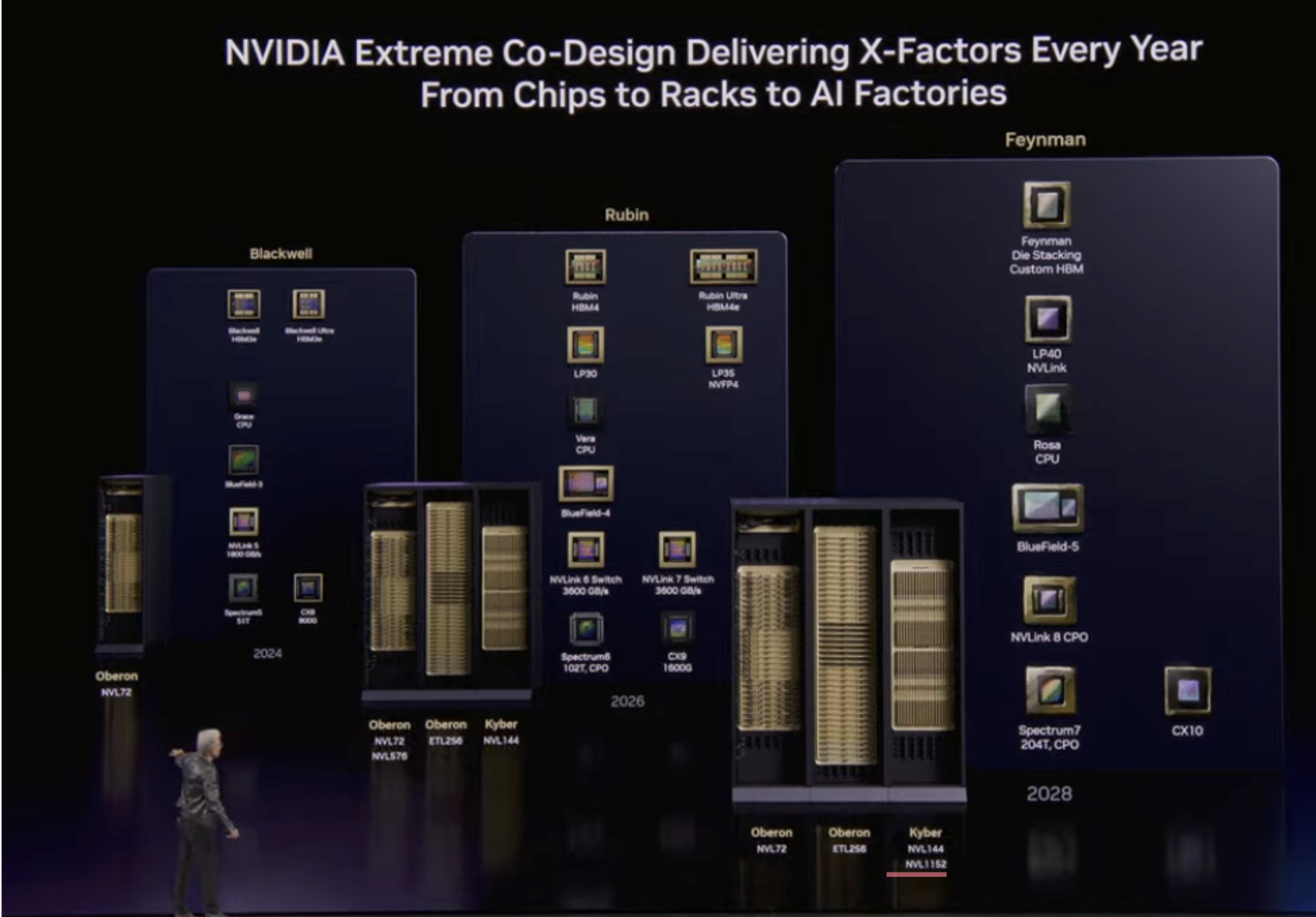
I spent the week at Nvidia GTC 2026 while juggling our own events. You can see the link stack below, but at a high level, here’s what I’m thinking. - If I built an AI factory a year ago, I’m already having buyer’s remorse. The architecture, complement of seven chips on the platform, AI inference improvements, and advances add up to a better AI factory. Yes, we were repeatedly told that older Nvidia infrastructure performs well, but there’s serious depreciation as AI advances so quickly.
- With the addition of Vera CPUs and everything else in the Nvidia stack, it’s clear that customers will have to decide whether to buy everything from Nvidia or choose a heterogeneous AI path. For cloud hyperscalers and LLM giants, the decision has been made. Nvidia is part of the mix, but so is custom silicon and other options. Enterprises will need to decide.
- Nvidia’s ecosystem and software heft is the moat that’ll ensure dominance into the foreseeable future.
- The company’s open-source model strategy is interesting. On the one hand, Nvidia is competing with the big proprietary LLM providers that happen to spend a lot on Blackwell and Vera Rubin systems. Then again, the US needs open-source models, and Nemotron is the only game in town.
- Is Nvidia the next Cisco or next Apple?
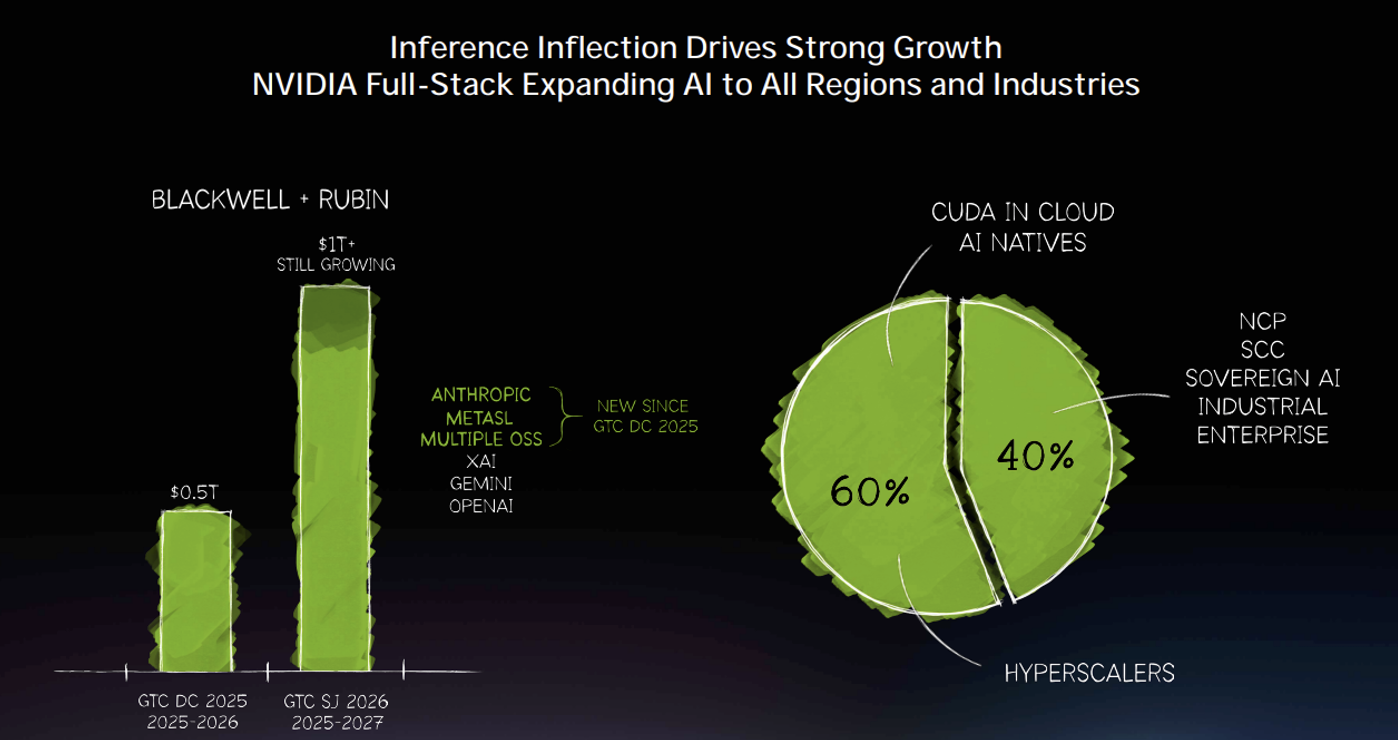
- Huang had a good bit of mop-up duty with analysts to flesh out what was said during the keynote. Much of it revolved around this slide.
| | | | Here’s our stack of GTC coverage: | | | | | |
NOTEBOOK
📓 For the latest on Constellation Research’s AI Forum and breaking news, see Constellation Insights and my live Notebook.
🎰 Fortinet is betting that long-term investments in its own AI data centers and silicon, being early to quantum-safe offerings, and AI agents moving to the edge will drive its results going forward.
🚀 OpenAI launched GPT-5.4 mini and nano, two models that are aimed at AI agents, coding, and multi-modal workflows.
📈 DocuSign reported better-than-expected fourth-quarter results and upped its outlook for the first quarter and fiscal 2027. The company reported earnings of 44 cents a share on revenue of $836.86 million, up 8% from a year ago. Non-GAAP earnings of $1.01 a share topped expectations. Wall Street was expecting DocuSign to report fourth-quarter non-GAAP earnings of 95 cents a share on revenue of $828.22 million.
🏗️ Infrastructure, the company behind the Canvas learning management system (LMS), launched the IgniteAI Agent, which orchestrates and executes workflows for educators and administrators. Infrastructure said that IgniteAI is built on Amazon Bedrock.
🫱🏽🫲🏾 Accenture and Databricks said they're forming a new business group that'll include more than 25,000 Databricks-trained pros. The goal is to accelerate enterprise AI adoption.
🦞 OpenClaw founder Peter Steinberg was asked about why he started OpenClaw. The short version: "Sometimes you just want to talk to your computer," he said. "You also want AI that actually does things."
✍🏽 Nebius said Meta has signed a five-year agreement for $12 billion in dedicated capacity in multiple locations. The deployment will be based on Nvidia's Vera Rubin platform. | | | | | |
Insights Archive
Disruption coming for ERP and not from where you'd think
Anthropic vs. SaaS: A nuanced view
Zoho Day 2026 themes to watch: ERP, SaaS, customer value, AI, sovereignty
How three hotel giants are playing agentic commerce, AI
SaaS under the microscope: How to evaluate your vendor Forward-deployed engineers: The promise, peril in AI deployments Caterpillar’s AI Vision Takes Shape, but Data, Cloud Focus Was the Precursor Agentic AI experiences will determine enterprise winners Why enterprise AI leaders need to bank on open-source LLMs -
Enterprise technology 2026: 15 AI, SaaS, data, business trends to watch - 2025 in review: AI trends from the buy side and sell side
- Rimini Street’s second act will include heavy dose of agentic AI, UX
- AWS re:Invent 2025: This one was different
- The enterprise LLM questions you should be asking
- Frontline workers get their AI moment
- A look at the intersection of AI and customer experience
- AGI may be far away, but 'jagged AI' will still take jobs
- CCE 2025: AI agents: Dreams, reality and what's next
- OpenAI, Anthropic increasingly diverge as strategies evolve
- Welcome to the context chorus: There’s no AI without context
| | | | | | | | | | | |