| | | | | |
Zillow is betting that AI will be a boon to its business, both internally and in customer experiences, thanks to a hefty dose of proprietary data, context, and the ability to tailor its own large language models.
At an AI day for investors, Zillow executives outlined their AI plans and the company's data moat. Like enterprise software companies, Zillow shares have been caught in a downdraft over concerns about Anthropic. The general idea is that AI agents will find you a house and guide you through the transaction.
The problem with that theory is that real estate transactions are complicated, messy, and have multiple moving parts. Even without agentic AI fears, Zillow faces tough competition from players like Rocket, which provides mortgages and services, and recently acquired Redfin to complete its own data flywheel. "When we have the data and user intent we have, and you think about the models we're building and training, who's going to build the best personalization? The ones who will build the best models to drive experiences are the ones who have the expertise and data to do that in context," said David Beitel, Zillow's chief technology officer.
Zillow is building a feature called Zillow AI mode to help both consumers and real estate agents remove friction from real estate transactions. Zillow executives see context and content as their differentiator. In a roughly three-hour investor presentation, Zillow executives used 'context' 24 times, 'content' 39 times, and 'data' 72 times.
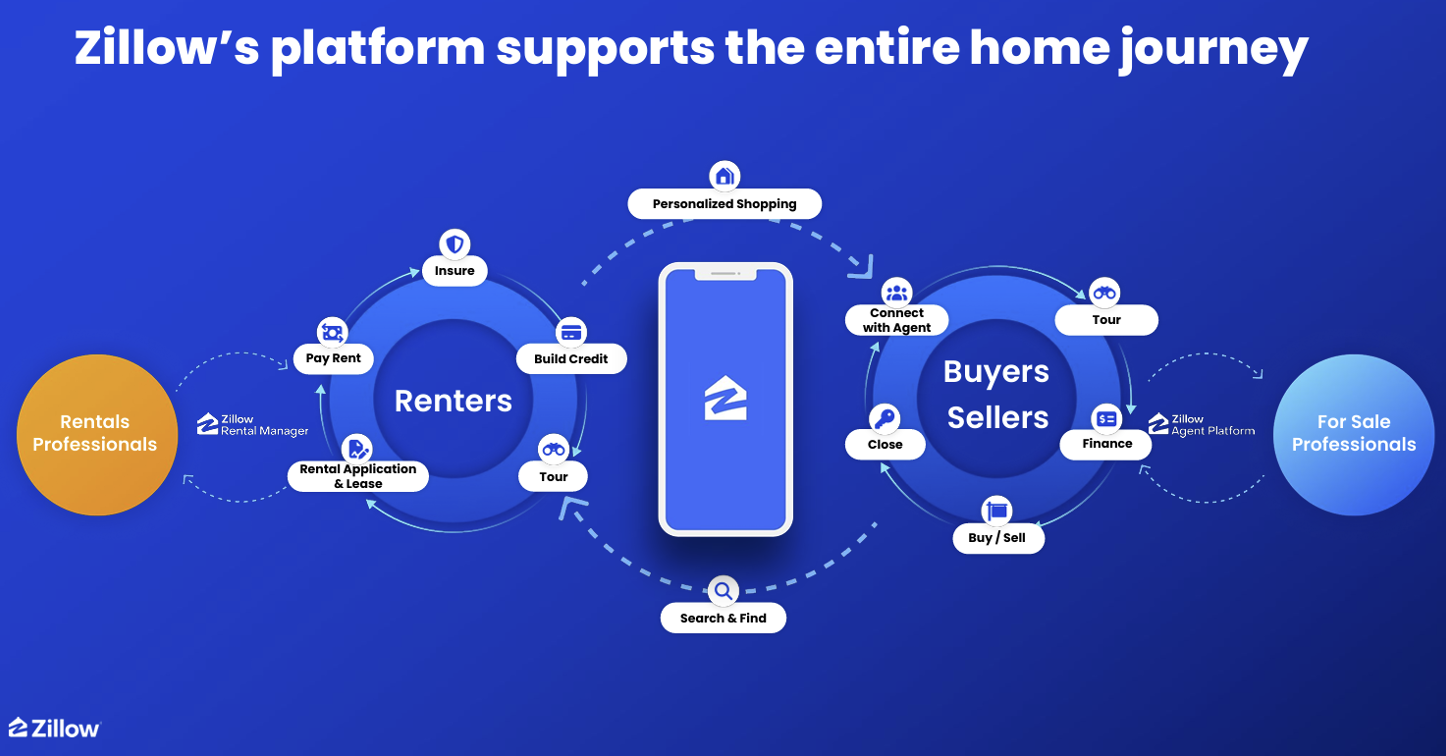
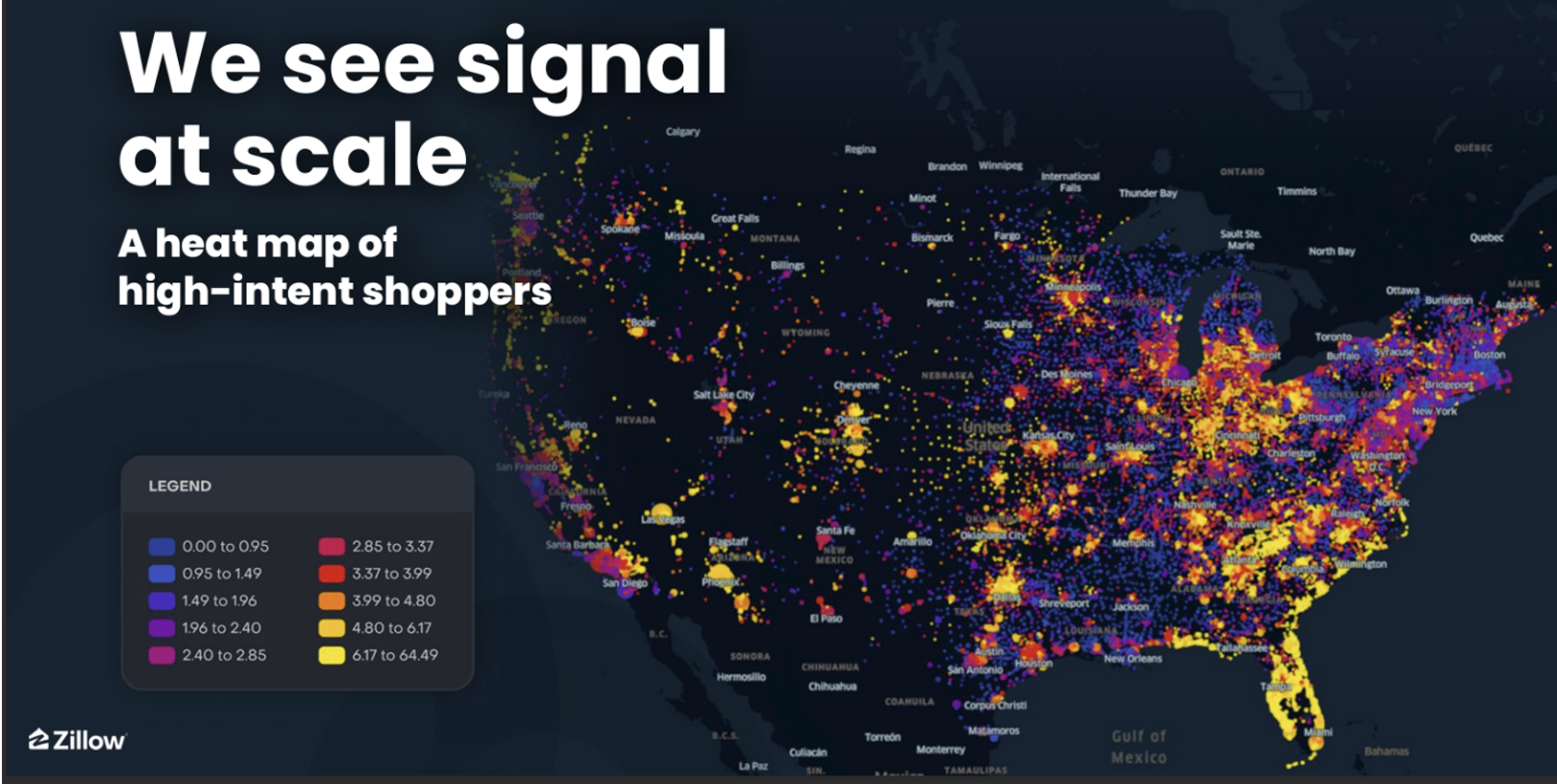
The message from Zillow is simple: It has its data flywheel running, and that means its tailored approach to AI models will trump horizontal players. Zillow also has 235 million unique visitors to its sites and apps, and 80% of that traffic is direct traffic for researching and buying homes and rental properties. Zillow also provides back-end systems to real estate agents, so it touches multiple points of a transaction. | | | |
Jeremy Wacksman, CEO of Zillow, said:
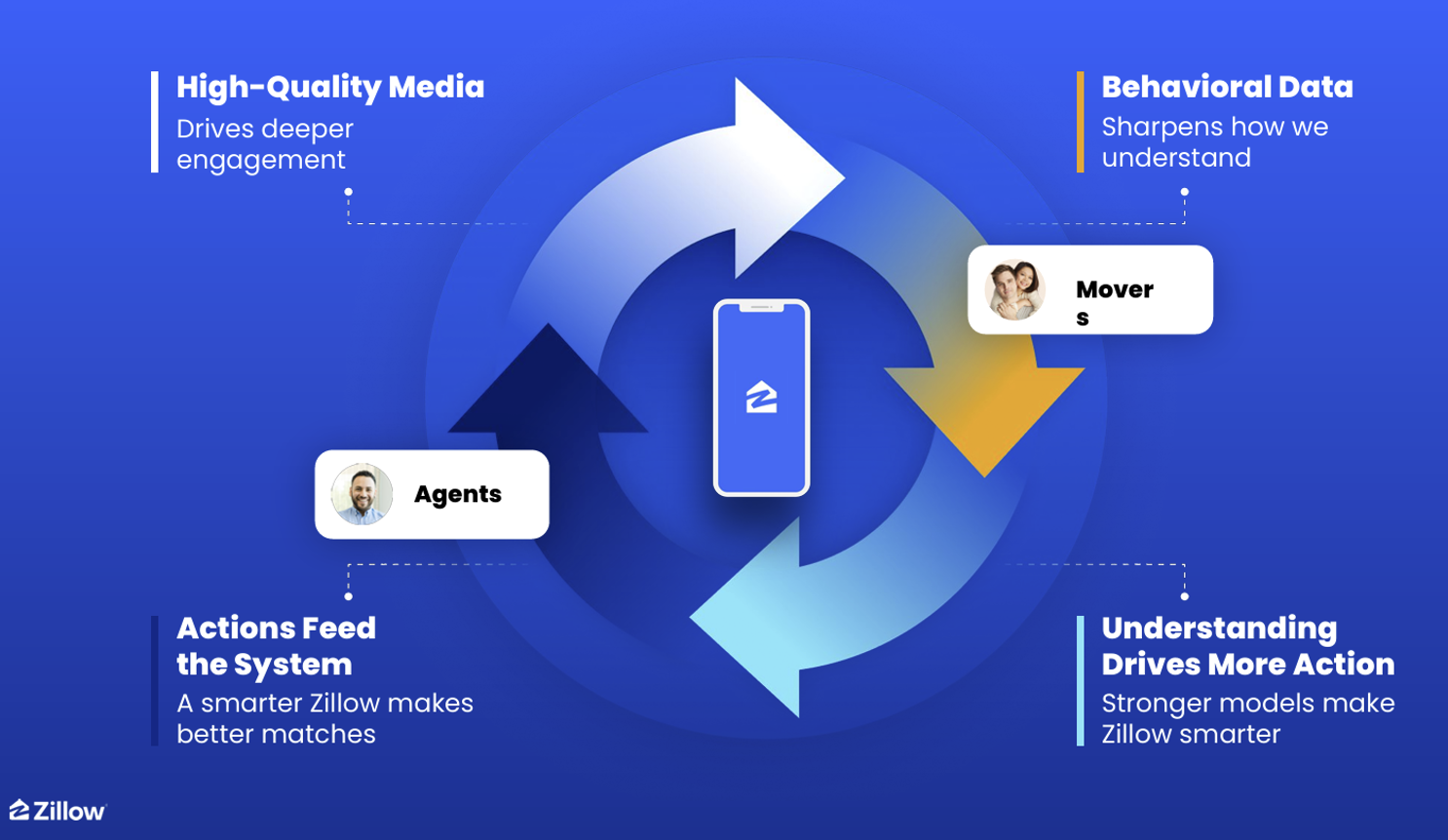
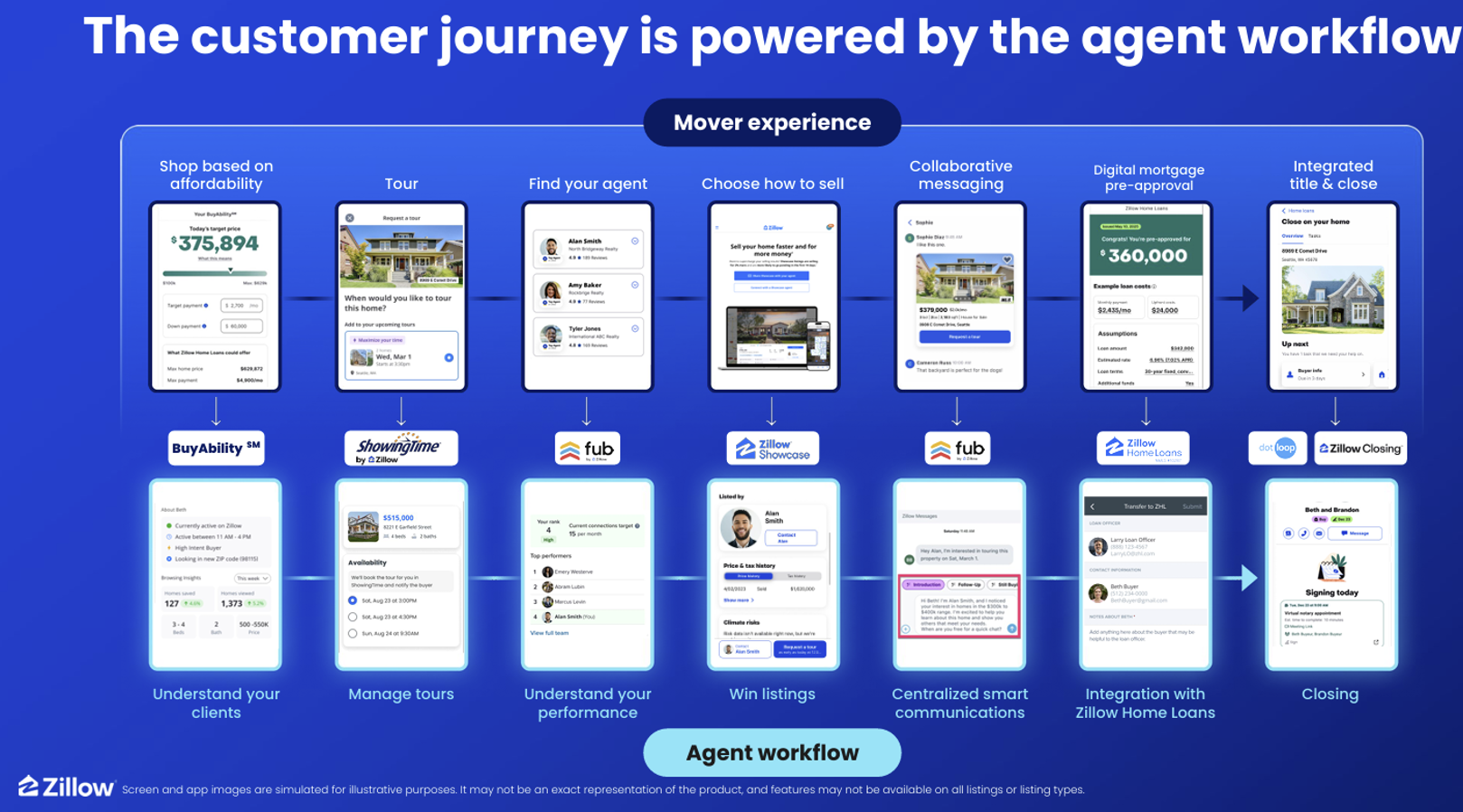
"Once you operate across the entire transaction, you get something incredibly unique and valuable, data that compounds. We don't just see the search or the initial question you ask. We see the tours you take. We see the affordability data you're using. We see the conversations you're having with your agent, the offers you make, the homes you close on. All of that data, proprietary data, and context about our buyers, sellers, and our professionals is context. And that context is what allows Zillow to build a far more powerful AI experience than any horizontal LLM can deliver for real estate.
That context is a feedback loop. The more people who use it, the more context it gives us about themselves and the professionals who feed the system. That is not theoretical. That works in our system today." | | | | Content and context
Wacksman said Zillow's secret sauce is its ability to detect signals in real estate transactions. A buyer or seller using Zillow has been scrolling for months and saving homes. They've been comparing neighborhoods, checking mortgage rates, and using Zillow's Zestimate. Renters have taken a similar route.
According to the company, 70% of people who buy and sell homes in the US use Zillow during the transaction process. Buyers spend two to three hours a week over 5 months.
Ultimately, these top-of-funnel real estate players look for actions to take, and Zillow can act on the intent signals. "Only Zillow can see things like all the homes you've saved and viewed and the ones you're coming back to every day signaling intent," said Wacksman, who said Zillow also sees available tour times on listings, what's available, and reviews. | | | |
"We can guide and help consumers take action, from understanding what a home might appraise for to gauging real-time demand to understanding why this Zestimate is what it is, to helping someone decide if they're financially ready to transact. And we don't stop at guidance, we help them take action, booking an instant book tour, getting preapproved, and hiring an agent. That guidance -- that strategy only works if you have the full advantage of the category. You need live housing data, the content. You need all of that consumer behavior, the context, and you need to be an end-to-end platform, the transaction infrastructure," said Wacksman.
Wacksman said Zillow's bet on immersive media and content provides a better consumer shopping experience but also drives insights. That content and the data from it will help Zillow build its AI experience, as the company can use data on layout, room flow, and lighting to pair with accurate square footage to train models.
| | | | On the backend, Zillow has a CRM system for its Zillow Premier Agents, with 100,000 agents using it. Wacksman said the company has been layering AI-powered workflows into its CRM systems. Real-time tour customers convert 3x the rate of normal customers, and preapproved buyers on Zillow Home Loans convert at a 5x clip.
"When you integrate the shopping behavior, the touring data, the CRM data, the financing data, the transaction data, you create context that differentiates Zillow and value that only we can deliver. Sustained intent combined with proprietary rich media provides an AI platform that is directly integrated into the rails of the industry," said Waxman. | | | | Does Zillow have a moat?
Wacksman said the data flywheel and complexity of a real estate transaction serve as a natural moat. That moat isn't foolproof, but it does give Zillow an edge. "We are doing this in arguably the most regulated and complex category in the country. Structural complexity in housing shapes how AI can even operate. In fact, we must have licensed brokerage relationships in all 50 states just to get listings, let alone answer questions that require a license to properly answer," said Wacksman. "The volume of complexity in this category is staggering. Every state has unique regulations. There are hundreds of thousands of brokers working across over 500 MLSs, powering 1.5 million agents to do transactions."
Cynthia Taylor, Senior Vice President of Product, said that generic LLMs won't be able to answer questions that look like agency or fiduciary guidance or brokerage activity due to licensing restrictions. In addition, the real estate market is fragmented, and few platforms have the whole picture of buyer intent.
The AI strategy
Zillow executives outlined multiple AI initiatives to improve efficiency across the customer journey and internal operations. "AI is accelerating our strategy to become the housing operating system of choice," said Wacksman. “Consumers and industry professionals choose Zillow. And agentic AIs will need to choose Zillow because we sit at the center of it all."
Taylor said Zillow's AI strategy is to leverage its "unified intent layer" to create product experiences that remove friction and anticipate a buyer's next steps. Like most AI strategies, Zillow's journey all starts with data.
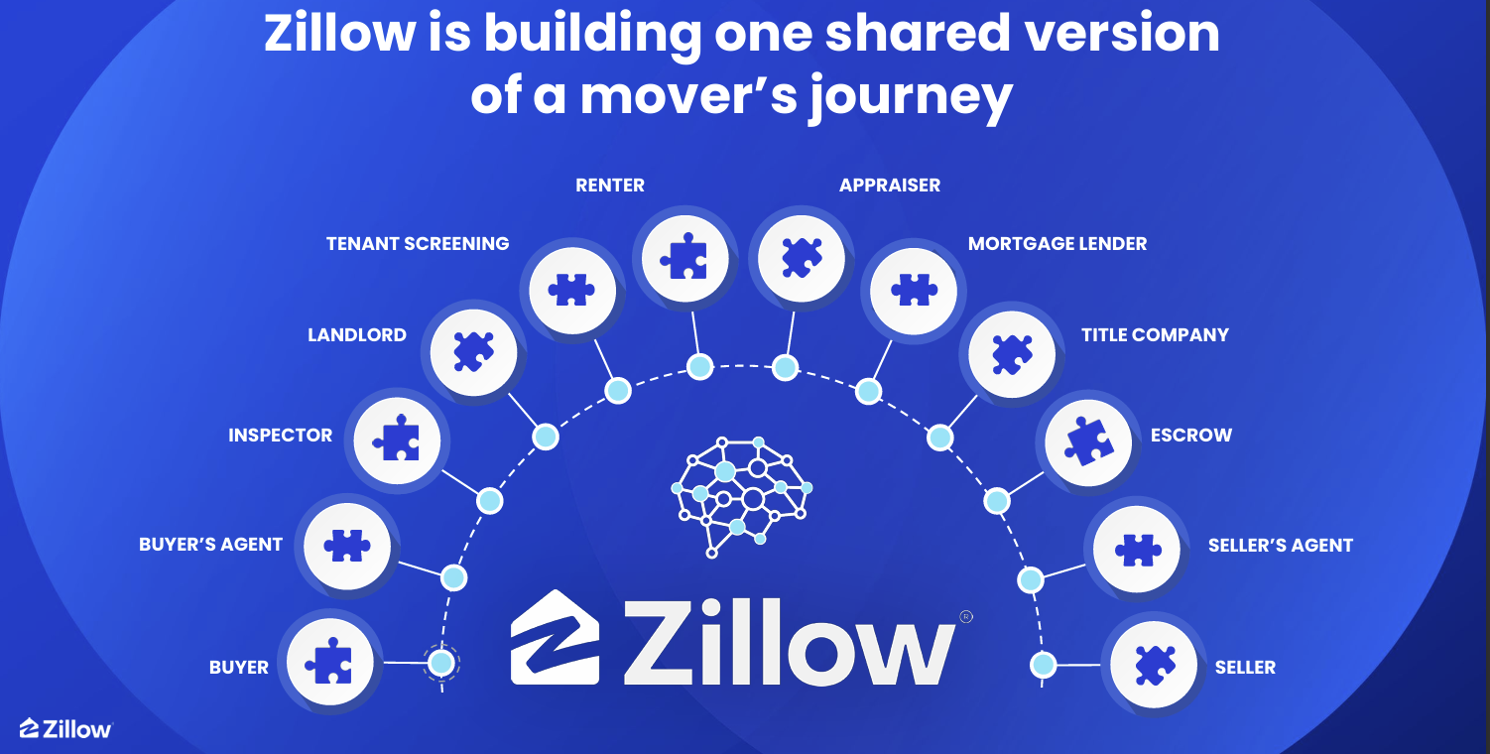
"Zillow is building one shared version of the deal across the entire Zillow professional ecosystem. These are the products that hundreds of thousands of real estate agents use daily. One identity layer, one deal object, one contact model, one document system. And what this allows Zillow to do is it allows Zillow to paint a picture into the deal and have one version of the truth," said Taylor. "When this content, context, and integration are in the same system, the experience deepens in a meaningful way for our consumer and our professional customers." | | | | This approach to data and AI is beginning to show up in Zillow's products. Along with its AI day for investors, Zillow has recently announced the following: - A new personalized AI mode on Zillow allows movers to research homes, understand affordability, and explore neighborhoods. When consumers are ready to take the next steps, Zillow connects them to a real estate agent. The model behind Zillow's AI guide is customized for real estate and routes intent across the company's ecosystem.
- SkyTour, Zillow feature that uses drone footage and AI to provide an external view of properties and the surrounding neighborhood.
- AI enhancements to virtual tours. Zillow added new AI image processing and navigation updates to Zillow 3D Home tours and interactive floor plans.
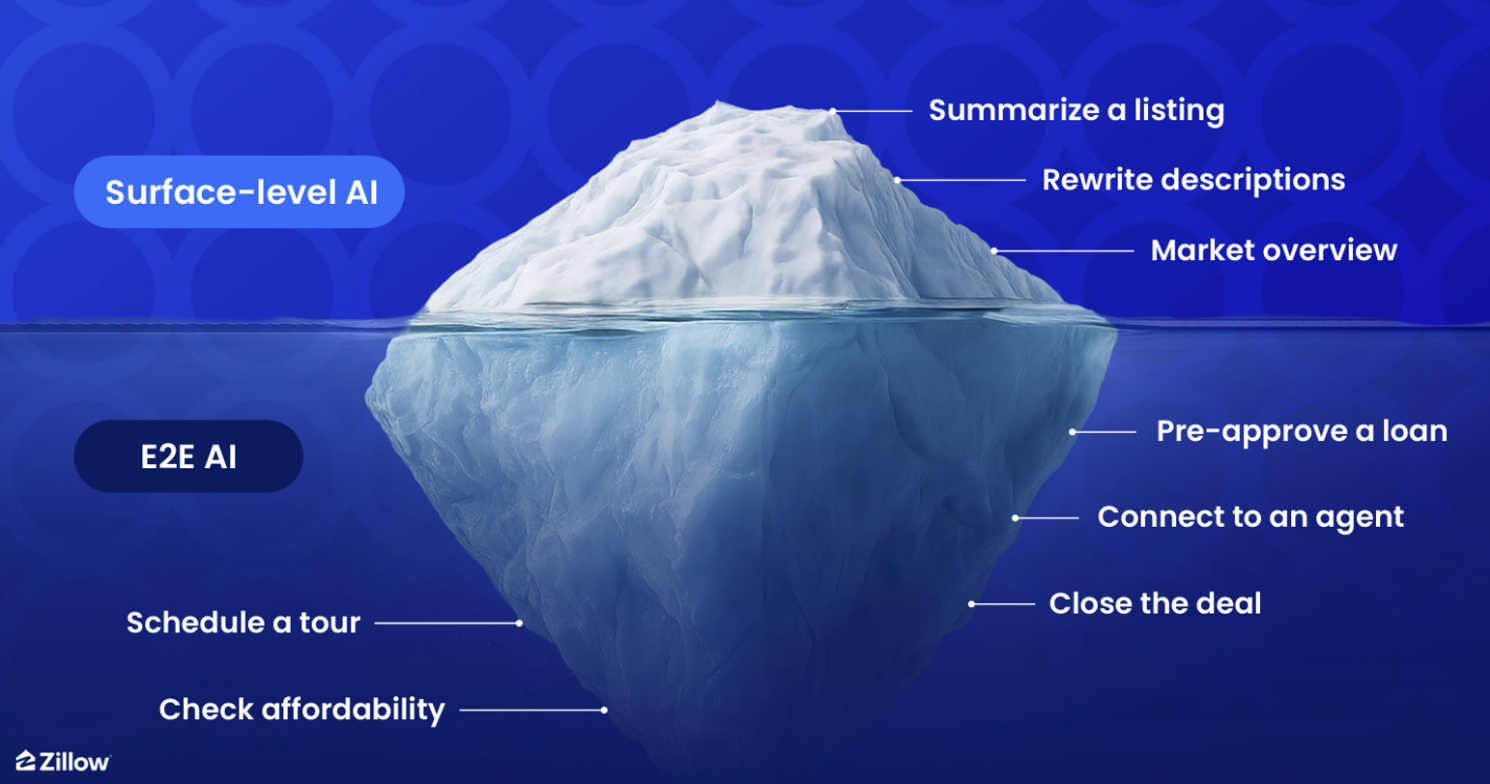
Nicholas Stevens, Vice President of Product at Zillow, said the company has 300 people building AI-driven experiences. Stevens said Zillow is building AI experiences that go beyond surface-level questions. "It's an incredibly hard challenge because if you make up any of the answers, if you get anything wrong, if you give the wrong guidance, that's an incredibly trust-busting moment. You need the AI to join the customer where they are in the trenches and really make sure it's appropriately guiding and directing, just like any good confidant would," said Stevens.
Stevens said generic LLMs can find homes, but once consumers need to go deeper, they usually hand off to Zillow. "AI with content, with context about the users and professionals, and with integration, end-to-end integration, that's what closes the loop," said Stevens.
In a demo, Stevens showed AI mode in Zillow, and a customer was having a conversation with Zestimate and asking questions. "With AI mode, we can actually have that conversation based on all the data that Zestimate uses behind the scenes," said Stevens.
For real estate pros, Zillow is working across its product portfolio, such as Zillow Pro, Showcase, and Follow Up Boss, to layer in AI tools to automate workflows. AI is used to draft content, message clients, update customer profiles, surface signals to sellers, and analyze documents.
The tech stack
In its annual report, Zillow said it primarily relies on Amazon Web Services, its preferred cloud provider, for compute and storage.
Zillow has adopted a strategy that uses AWS at its core to scale storage, compute, and delivery as the company focuses on its data moat. In many respects, Zillow is a data-products company that relies on an AWS-native machine-learning stack.
Here's a look at Zillow's AWS stack as detailed in blogs and multiple re:Invent appearances. Zillow has detailed its data streaming architecture and noted in a blog post that Amazon S3 serves as its persistent storage, and that the company has created a hub for all data streams called Zillow Data Lake. "Our Data Lake stores all historical data so it can be consumed by our data processing engine, Apache Spark, to run our complex machine learning algorithms. It can also be used by other teams at Zillow Group, including Premier Agent, StreetEasy, Trulia, and dotloop," said Zillow.
Internally, Zillow is leveraging multiple AI code tools. "There are a lot of people who are using Replit, which is basically a non-developer vibe coding tool to express their ideas. All the developers use Cursor, Claude Code, ChatGPT, or Gemini. Those gains are real, and we're moving as fast as we can to become what we call an AI native company," said Lloyd Frink, Co-Founder, Co-Executive Chairman & President.
And there's a healthy dose of co-opetition, but that doesn't preclude Zillow from partnerships. Horizontal players like Google have always been a threat to Zillow and a partner. OpenAI and Anthropic fall into the same category. "These large LLMs, horizontal LLMs, are quite excited to partner with us, and we are going to go meet our customers wherever they are. So, they're there, and we're going to be there," said Frink. | | | |
NOTEBOOK
📓 For the latest on Constellation Research’s AI Forum and breaking news, see Constellation Insights and my live Notebook.
🛜 Hasbro said in an SEC filing that it was hit by a cybersecurity attack that forced the company to take certain systems offline. In the filing, Hasbro said it discovered unauthorized access to its network on March 28.
❌ Oracle has cut its workforce from 20,000 to 30,000, or 18%, and the emails to affected employees are scattered across X and LinkedIn. The roundup of coverage is here.
📈 OpenAI raised $122 billion in funding and now has a valuation of $852 billion. In a blog post, OpenAI said it is generating $2 billion in revenue a month. OpenAI is arguing that its growth in revenue and users justifies the premium.
🤖 Salesforce said it is adding 30 new capabilities to Slackbot, the linchpin in its positioning of Slack as a work OS for agentic AI. New capabilities include meeting transcription and note-taking, reusable AI skills defined by teams, the ability to act as an MCP client and route work or questions to Agentforce, and access to Customer 360 interfaces and data.
🚀 OpenAI launched a Codex plugin for Anthropic's Claude Code, which will likely become a trend as the big LLM players try to one-up each other to move up the orchestration layer. Also see: Microsoft 365 Copilot’s Researcher agent goes multi-model
👾 Google has hedged its bets on quantum computing, saying it will expand its research into neutral atoms while maintaining its focus on superconductors.
📉 Blue Yonder's Supply Chain Compass report provides a sobering look at the supply chain and how leaders are adapting to frequent disruptions. In a survey of 700 supply chain pros, Blue Yonder found that 66% of leaders are ready for the future, down from 73% last year.
💻 US PC shipments grew 3% in the fourth quarter as buyers procured systems for Windows 11 commercial refreshes and stocked up ahead of higher memory and storage prices, according to Omdia. In 2026, PC shipments are expected to decline by 13% due to memory and storage shortages and the higher prices that accompany them.
👍 Stanford published a study in Science on LLMs that found that AI affirmed users' actions 49% more often than humans on average, including in cases involving deception, illegality, and other harms. The short version from the researchers is here, but the paper is a better, more nuanced read. | | | | | |
Insights Archive AI Forum 2026: There isn’t an easy button for AI Constellation Research's Futures Forum: What CEOs are thinking Where’s tokenomics for the rest of us?
Disruption coming for ERP and not from where you'd think
Anthropic vs. SaaS: A nuanced view
Zoho Day 2026 themes to watch: ERP, SaaS, customer value, AI, sovereignty
How three hotel giants are playing agentic commerce, AI
SaaS under the microscope: How to evaluate your vendor Forward-deployed engineers: The promise, peril in AI deployments Caterpillar’s AI Vision Takes Shape, but Data, Cloud Focus Was the Precursor Agentic AI experiences will determine enterprise winners Why enterprise AI leaders need to bank on open-source LLMs -
Enterprise technology 2026: 15 AI, SaaS, data, business trends to watch - 2025 in review: AI trends from the buy side and sell side
- Rimini Street’s second act will include heavy dose of agentic AI, UX
- AWS re:Invent 2025: This one was different
- The enterprise LLM questions you should be asking
- Frontline workers get their AI moment
- A look at the intersection of AI and customer experience
- AGI may be far away, but 'jagged AI' will still take jobs
- CCE 2025: AI agents: Dreams, reality and what's next
- OpenAI, Anthropic increasingly diverge as strategies evolve
- Welcome to the context chorus: There’s no AI without context
| | | | | | | | | | | |